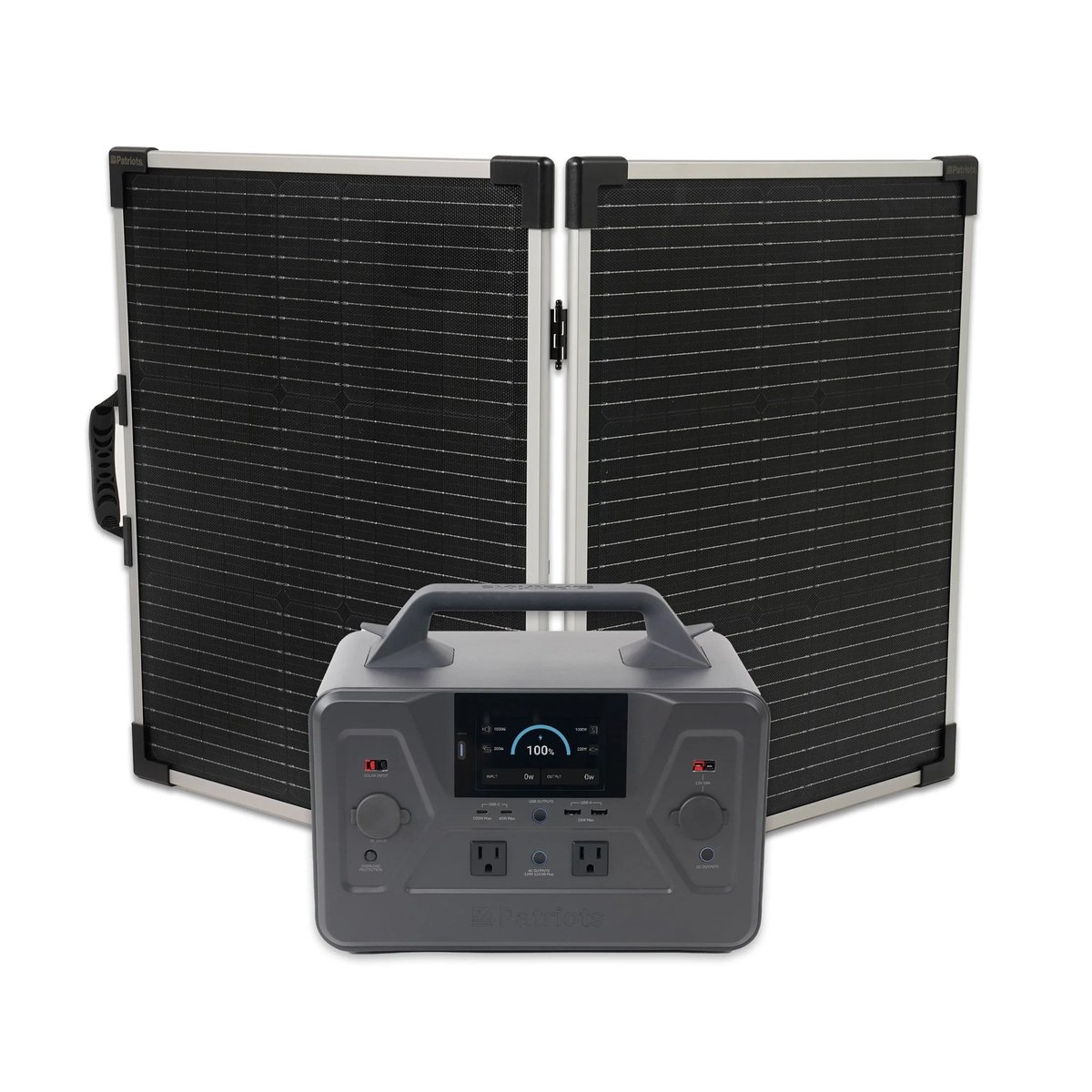
In a world where reliable power can make all the difference, especially during unexpected outages or off-grid adventures, your 4Patriots solar generator isn't just a gadget—it's a critical tool for preparedness. To ensure it’s always ready when you need it most, understanding the ins and outs of Troubleshooting & Maintenance for 4Patriots Solar Generators isn't just smart, it's essential.
No matter which 4Patriots model you own—be it the robust Patriot Power Generator 2000X, the portable Sidekick, or another from their reliable lineup—a bit of regular care and a clear understanding of common issues can significantly extend its lifespan and guarantee its performance. Think of this guide as your trusted co-pilot, helping you navigate everything from routine upkeep to those head-scratching moments when your power isn't flowing quite right.
At a Glance: Keeping Your Power On
- Your Manual is Key: Always consult your specific 4Patriots product manual first for model-specific advice.
- Cleanliness is Next to Power-ness: Regularly clean solar panels and generator vents.
- Store Smart: Keep your generator and batteries in cool, dry conditions with a partial charge.
- Inspect Often: Check cables and connections for wear or damage.
- Test Regularly: Run and charge your generator periodically to ensure readiness.
- Troubleshoot Systematically: Start with the basics (power, cables, settings) before escalating.
- Don't Overload: Understand your generator's wattage limits to prevent shutdowns.
- Know When to Call: Contact 4Patriots support for persistent or complex issues.
Why Your 4Patriots Generator Deserves TLC (Tender Loving Care)
Your 4Patriots solar generator is an investment in self-reliance, designed to provide power when the grid goes down or when you're far from an outlet. From charging phones and running essential medical devices to powering small appliances, its role is invaluable. But like any sophisticated piece of equipment, it thrives on attention. Ignoring routine maintenance can lead to reduced efficiency, shorter battery life, and even unexpected failures precisely when you need it most.
Proactive maintenance safeguards your investment, ensures peak performance, and gives you peace of mind. When an issue does arise, knowing how to quickly diagnose and address it means less downtime and a swift return to reliable power.
Before You Begin: Your 4Patriots User Manual is Gold
While this guide offers comprehensive general advice, the absolute best resource for your specific 4Patriots solar generator model is its user manual. Each manual contains detailed specifications, safety warnings, and troubleshooting steps unique to that particular unit.
Where to Find Your Manual:
- 4Patriots Website: Visit 4patriots.com, navigate to their product support section, and look for "Power Manuals." You can usually find the full user manual by clicking on your specific product (e.g., Patriot Power Generator 2500X, Patriot Power Generator 1200, Patriot Power Generator 2000X, Patriot Power Generator AlphaCase Elite, Patriot Power Sidekick, Patriot Power Expandable Battery 1300, Patriot Power Cell, Patriot Power Battery Connector).
- ManualsLib: This third-party site also hosts many 4Patriots manuals, often providing a quick way to find what you need if you have your model number handy.
Before attempting any troubleshooting or maintenance, always take a moment to review the relevant sections of your generator's manual. It might save you time, effort, and potential damage.
Routine Maintenance: The Ounce of Prevention
Think of maintenance as a health check-up for your generator. Regular, simple steps can prevent major problems down the line, ensuring your system is always in top fighting form.
Keep It Clean: Solar Panels and Generator Vents
Dirt, dust, pollen, and even bird droppings can significantly reduce the efficiency of your solar panels. Just like a dirty window blocks light, a dirty panel blocks crucial sunlight from reaching the photovoltaic cells.
- Solar Panels: Gently wipe down your solar panels with a soft, damp cloth and mild soap (if needed) at least once a month, or more frequently if they're exposed to a lot of dust or debris. Avoid abrasive cleaners or harsh scrubbing, which can scratch the surface. Ensure panels are dry before connecting or storing.
- Generator Unit: Check the ventilation grilles and cooling fans on your generator unit. Dust and debris can accumulate here, restricting airflow and causing the unit to overheat. Use a soft brush or compressed air to carefully clear any blockages. Ensure the generator is turned off and unplugged before cleaning.
Optimal Storage Conditions: Temperature and Charge Level
How you store your generator profoundly impacts its battery life and overall longevity. Lithium-ion batteries, common in 4Patriots generators, are sensitive to extreme temperatures and prolonged states of full or empty charge.
- Temperature: Store your generator in a cool, dry place, ideally between 32°F and 85°F (0°C and 30°C). Avoid direct sunlight, garages that get scorching hot, or unheated sheds in freezing temperatures. Extreme heat accelerates battery degradation, while extreme cold can reduce performance and damage cells.
- Charge Level: For long-term storage (more than a month), it's generally best to store your generator with a battery charge between 50% and 80%. Storing at 100% for extended periods can stress the battery, while storing at 0% can lead to "deep discharge" and permanent capacity loss. Check the charge level every 3-6 months and top it up if it drops significantly.
Cable Check-Up: Inspecting Connections
Cables are the lifelines of your solar generator system, carrying power from panels to the generator and from the generator to your devices. Damaged cables can lead to charging issues, power loss, or even electrical hazards.
- Visual Inspection: Regularly check all cables—solar panel cables, AC charging cables, car charging cables, and output cables—for signs of wear, fraying, cracks, kinks, or insulation damage.
- Connection Integrity: Ensure all connections are snug and secure. Loose connections can generate heat, reduce efficiency, and cause intermittent power. Never force connectors.
Battery Health Habits: Avoiding Deep Discharge and Cycling
The battery is the heart of your solar generator. Taking care of it extends its life and ensures it delivers power consistently.
- Avoid Deep Discharge: Try not to consistently drain your battery below 20%. While 4Patriots generators have protection against deep discharge, habitually pushing them to their limit reduces overall battery cycle life.
- Understand Cycle Life: Batteries have a finite number of charge/discharge cycles. You can't avoid using them, but proper maintenance helps you get the most out of each cycle.
- Occasional Use: Even if you don't need your generator for emergency power, it's good practice to use it occasionally. Discharge it to about 50% and then recharge it fully every few months to keep the battery chemicals active.
Regular Testing: Load Testing and Charging
Just like you'd test your smoke detectors, you should test your solar generator to ensure it's functional.
- Charging Test: At least once every 3-6 months, fully charge your generator using its solar panels, AC charger, or car charger (test all methods you plan to use). Monitor the charging process to ensure it's working correctly and reaching full capacity.
- Load Test: Connect a small appliance (e.g., a lamp or a fan) to your generator and let it run for a while. This confirms that the inverter and output ports are functioning as they should under load.
- Verify Display: Ensure the display panel is accurately showing charge levels, output, and any status indicators.
Troubleshooting Common 4Patriots Solar Generator Hiccups
Even with the best maintenance, sometimes things don't go as planned. Here's a systematic approach to troubleshooting common issues you might encounter with your 4Patriots solar generator.
"My Generator Won't Turn On or Has No Power Output."
This is often the most frustrating issue, but it usually has a simple fix.
- Check the Power Button: It sounds obvious, but ensure the main power button (and any specific AC/DC output buttons) are firmly pressed and lit up.
- Battery Level: Is the battery charged? If the display shows a very low charge or is blank, the battery might be completely depleted. Connect it to an AC outlet for a direct charge and see if it powers on.
- Cable Connections: For no power output, ensure your device is securely plugged into the correct port (AC or DC). Try a different outlet on the generator if available.
- Device Functionality: Test the device you're trying to power with a standard wall outlet to ensure the device itself isn't the problem.
- Circuit Breaker (if applicable): Some larger units might have a reset button or circuit breaker. Check your manual to see if yours does and if it's tripped.
"It's Not Charging!"
Charging issues can stem from various points in the system.
Solar Charging Issues:
- Sunlight Exposure: Are your solar panels getting direct, unobstructed sunlight? Even partial shade from a tree branch or building can drastically reduce efficiency.
- Panel Orientation: Are the panels angled directly towards the sun? Adjust them throughout the day for optimal exposure.
- Panel Cleanliness: As mentioned, dirt, dust, and debris severely impact charging. Clean your panels.
- Cable Connections: Ensure the solar panel cables are securely connected to the panels and to the generator's solar input port. Check for any damage to the cables themselves.
- Charge Controller (Internal): Your 4Patriots generator has an internal charge controller. If all external factors are good, and it's still not charging, there might be an internal issue. Refer to your manual for specific diagnostics or error codes.
- Panel Compatibility: Confirm your solar panels are compatible with your specific 4Patriots generator model and that the voltage/wattage is within the generator's acceptable input range. Using incompatible panels can prevent charging or even damage the unit.
AC/Car Charging Issues: - Wall Outlet/Car Adapter: Test the AC wall outlet with another appliance to ensure it's live. For car charging, ensure the vehicle's engine is running, and the 12V port is functional.
- Charging Cables: Inspect the AC charging cable and car adapter cable for any signs of damage. Try another cable if you have one.
- Generator Port: Ensure the charging cable is securely inserted into the generator's AC or car charging input port.
- Overheating: If the generator is very hot, it might stop charging as a protective measure. Allow it to cool down in a well-ventilated area.
"Error Codes or Display Anomalies."
Modern solar generators often have digital displays that provide crucial information, including error codes.
- Consult Your Manual: This is paramount. Every 4Patriots model will have specific error codes and their meanings listed in its user manual. An "E01" on one model might mean something different on another.
- Common Codes: Generic errors often indicate:
- Overload: Too many devices or devices drawing too much power.
- Over-temperature: The unit is overheating, likely due to poor ventilation or high ambient temperatures.
- Low Battery: Battery is critically low and needs immediate charging.
- Input/Output Error: Issue with charging input or power output.
- Action: Once you identify the code, follow the manual's prescribed steps. This usually involves turning the unit off, disconnecting devices, allowing it to cool, or charging it.
"Overload Protection Kicks In Too Often."
Your generator's inverter is designed to protect itself from damage by shutting down if the total power draw of connected devices exceeds its rated output.
- Understand Your Watts: Check the continuous (running) wattage and surge (starting) wattage of all appliances you intend to run. Compare this to your 4Patriots generator's continuous and surge wattage ratings. For example, a Patriot Power Generator 1800 (which refers to an inverter and panel, often paired with a generator) will have specific ratings.
- Starting vs. Running Watts: Many motor-driven appliances (refrigerators, pumps) have a much higher surge wattage requirement for a few seconds when they start up than their running wattage. Your generator must be able to handle this surge.
- Disconnect and Restart: If an overload occurs, disconnect all devices, turn the generator off, wait a few minutes, then restart it. Reconnect devices one by one, starting with the highest wattage item, to identify the culprit.
- Prioritize Appliances: During an outage, you might need to prioritize which devices get power. Avoid running multiple high-draw appliances simultaneously. Consider staggering their use.
"Strange Noises or Smells."
Any unusual noises (grinding, buzzing, loud hums) or, especially, burning smells, are serious warning signs.
- Immediate Action: Turn off the generator immediately and unplug all devices and charging cables.
- Safety First: Do not attempt to use the generator if you detect a burning smell or see smoke. There could be an internal electrical fault or overheating component.
- Ventilation: Ensure the unit is in a well-ventilated area. Overheating can sometimes cause components to emit odors.
- Contact Support: For these symptoms, it's best to stop using the unit and contact 4Patriots customer support. Do not open the unit yourself, as this can void your warranty and expose you to electrical hazards.
"My Solar Panels Aren't Performing as Expected."
If your generator isn't charging adequately via solar, but the generator itself seems fine, the panels might be the issue.
- Sun Angle and Shading: Re-evaluate the placement of your panels. Even slight shading can cripple output. The sun's angle changes throughout the day and with seasons. Adjust panel tilt and direction for maximum exposure.
- Cleanliness: As always, ensure panels are spotless.
- Cable Integrity: Check all cables connecting panels to each other (if chaining) and to the generator. Look for damage or loose connections.
- Panel Damage: Inspect the panel surfaces for cracks, delamination, or other physical damage. A damaged cell or panel can reduce overall array output.
- Weather Conditions: Heavy clouds, fog, or rain will significantly reduce solar charging efficiency. This is normal, not a fault.
Deep Dive: Understanding Your Generator's "Health Metrics"
A little knowledge about the internal workings can help you understand the symptoms you observe.
- Battery Cycle Life: Your generator's battery has a rated number of charge/discharge cycles (e.g., 500 cycles to 80% capacity). This means after 500 full cycles, the battery will typically retain 80% of its original capacity. Good maintenance practices, like avoiding deep discharge, can help maximize these cycles.
- Inverter Efficiency: The inverter converts DC power from the battery into usable AC power for your appliances. No inverter is 100% efficient; some energy is lost as heat. This is why the generator consumes a bit more power than it outputs. If the generator feels excessively hot during operation, it could indicate an issue with the inverter or poor cooling.
- Charge Controller: This crucial component manages the flow of power from your solar panels to the battery, optimizing charging and protecting the battery from overcharging. While typically internal and maintenance-free, understanding its role helps diagnose charging problems. Many 4Patriots units likely use MPPT (Maximum Power Point Tracking) controllers for maximum efficiency, but knowing which type isn't usually necessary for basic troubleshooting unless specified in your manual.
For a broader understanding of how these powerful units fit into your readiness plans, you might find our Our 4 Patriots Solar Generator guide especially helpful. It delves into selecting the right model and maximizing its potential.
When to Call for Backup: Contacting 4Patriots Support
Sometimes, despite your best efforts, an issue is beyond basic troubleshooting. This is when it's time to leverage the expertise of 4Patriots customer support.
Before You Call, Gather This Information:
- Model Number: The specific model of your 4Patriots solar generator (e.g., Patriot Power Generator 2000X).
- Serial Number: Usually found on a sticker on the unit.
- Date of Purchase: For warranty purposes.
- Detailed Description of the Problem:
- What exactly is happening?
- When did it start?
- What steps have you already taken to troubleshoot?
- Any error codes displayed?
- What devices were connected, if any?
- Photos/Videos: If possible, have photos or short videos of the issue (e.g., an error code on the display).
Warranty Considerations:
Be aware of your generator's warranty period. Attempting to repair the unit yourself or having an unauthorized third party do so can void your warranty. Always check with 4Patriots support before taking drastic measures.
Beyond the Basics: Enhancing Longevity and Preparedness
Taking care of your 4Patriots solar generator isn't just about fixing problems; it's about optimizing its long-term performance and ensuring it’s ready for any scenario.
- Environmental Protection: While many 4Patriots generators are rugged, protect them from extreme elements like heavy rain, prolonged dust storms, or corrosive salt air. A breathable cover can offer protection during storage.
- Accessory Compatibility: Only use official 4Patriots accessories or explicitly recommended third-party components (e.g., compatible solar panels, charging cables). Using incompatible accessories can damage your unit or void your warranty.
- Load Management Plan: In a real emergency, knowing exactly which devices you'll power and for how long is crucial. Practice connecting and running your essential devices, so you're not fumbling when it truly matters.
- Stay Informed: Keep an eye on any product updates or recall notices from 4Patriots. Sometimes, firmware updates (if applicable to your model) can improve performance or fix bugs.
Your Power, Uninterrupted: Final Thoughts on Readiness
Your 4Patriots solar generator is a powerful tool for independence and resilience. By embracing a proactive approach to troubleshooting and maintenance, you're not just preserving a piece of equipment; you're safeguarding your ability to stay connected, safe, and comfortable when traditional power sources fail. Regular cleaning, smart storage, careful inspections, and a methodical approach to problem-solving will ensure your generator is a reliable companion for years to come. Remember, the goal is not just to have a solar generator, but to have one that you can absolutely depend on. Stay prepared, stay powered.